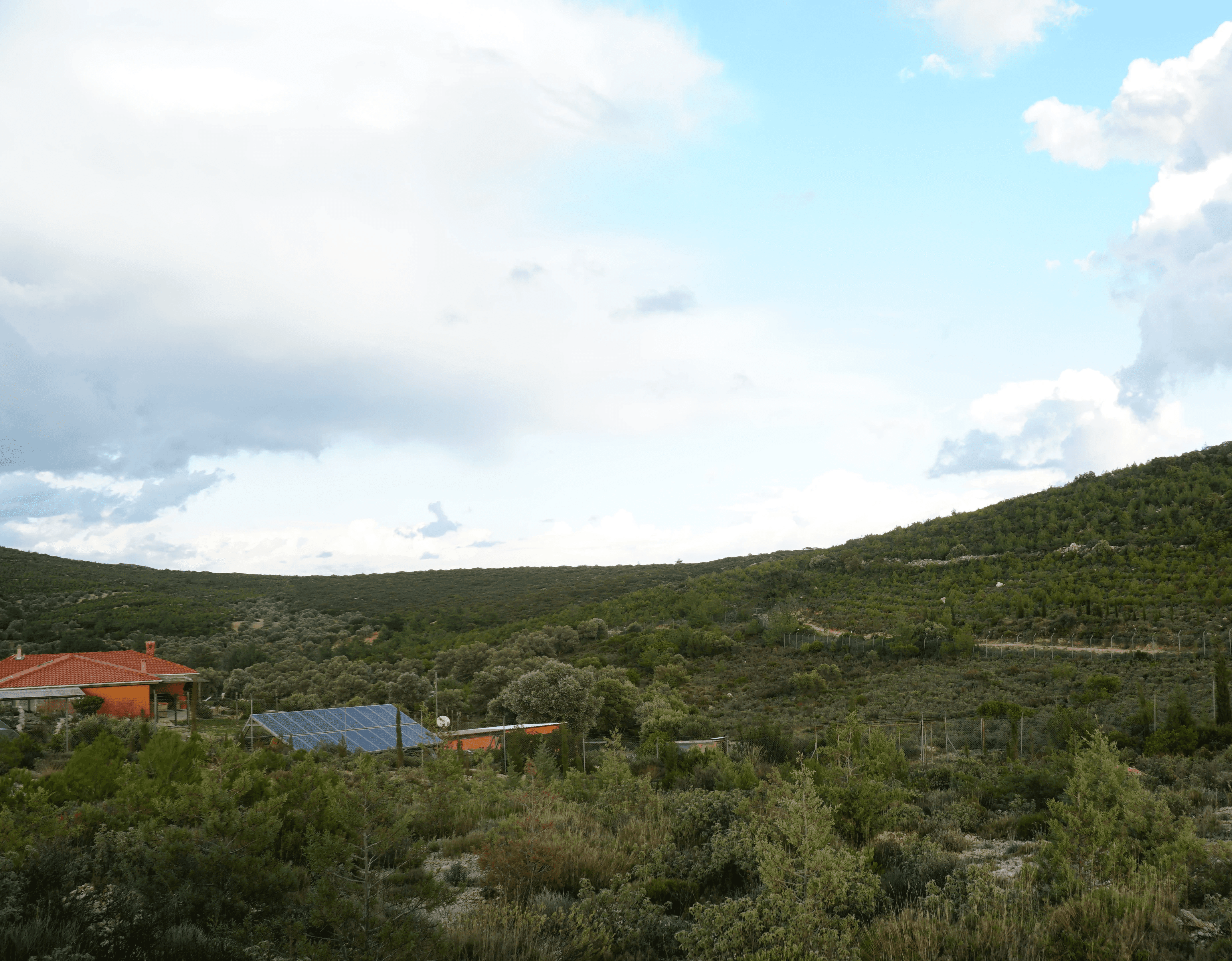
Located on the outskirts of Kadıovacık village, the 25-hectare land lies in a mountainous setting at the heart of the peninsula where three districts meet. Exposed to strong winds and defined by opposing slopes that form a valley, the site carries both challenges and ecological richness.
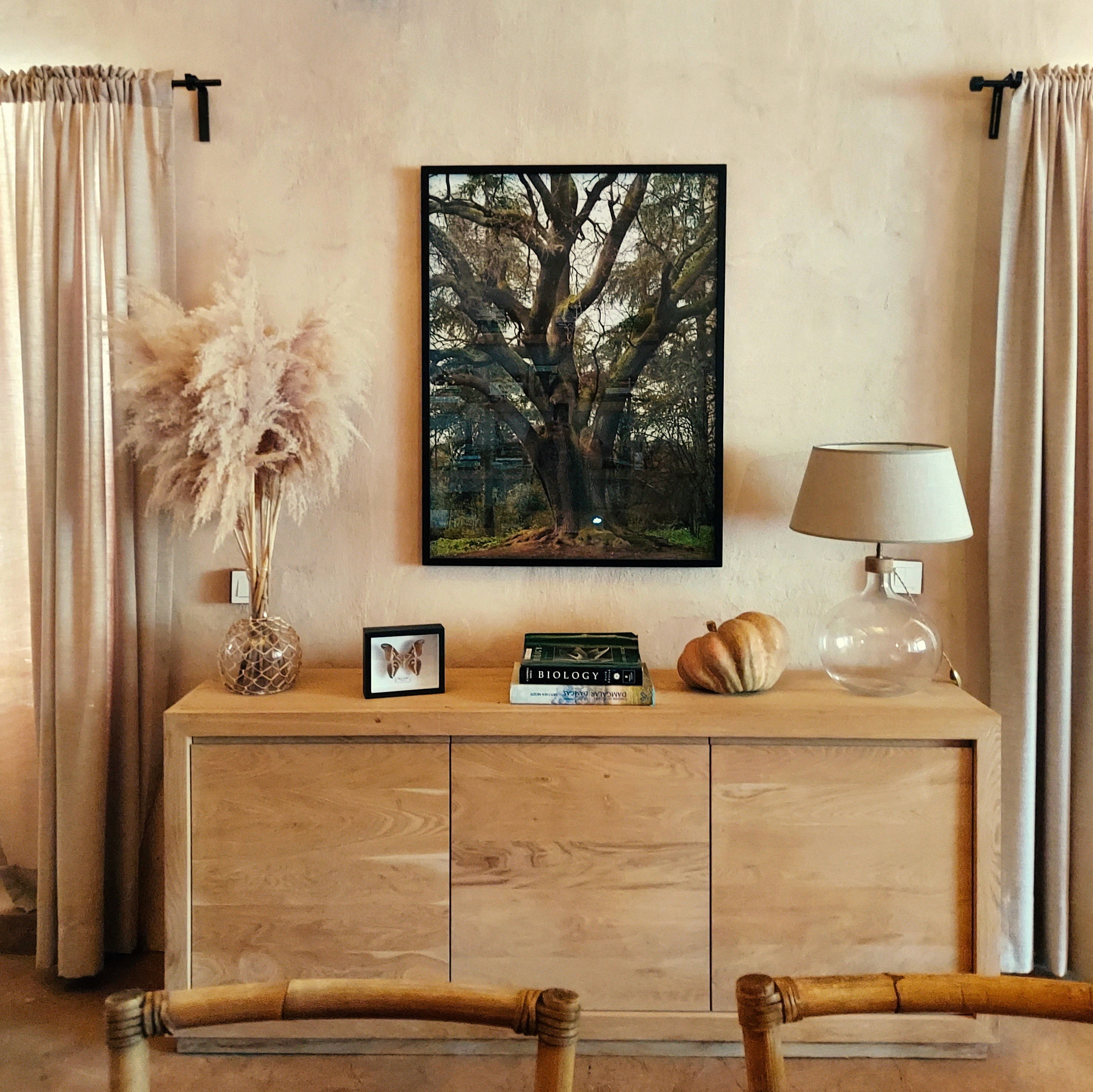
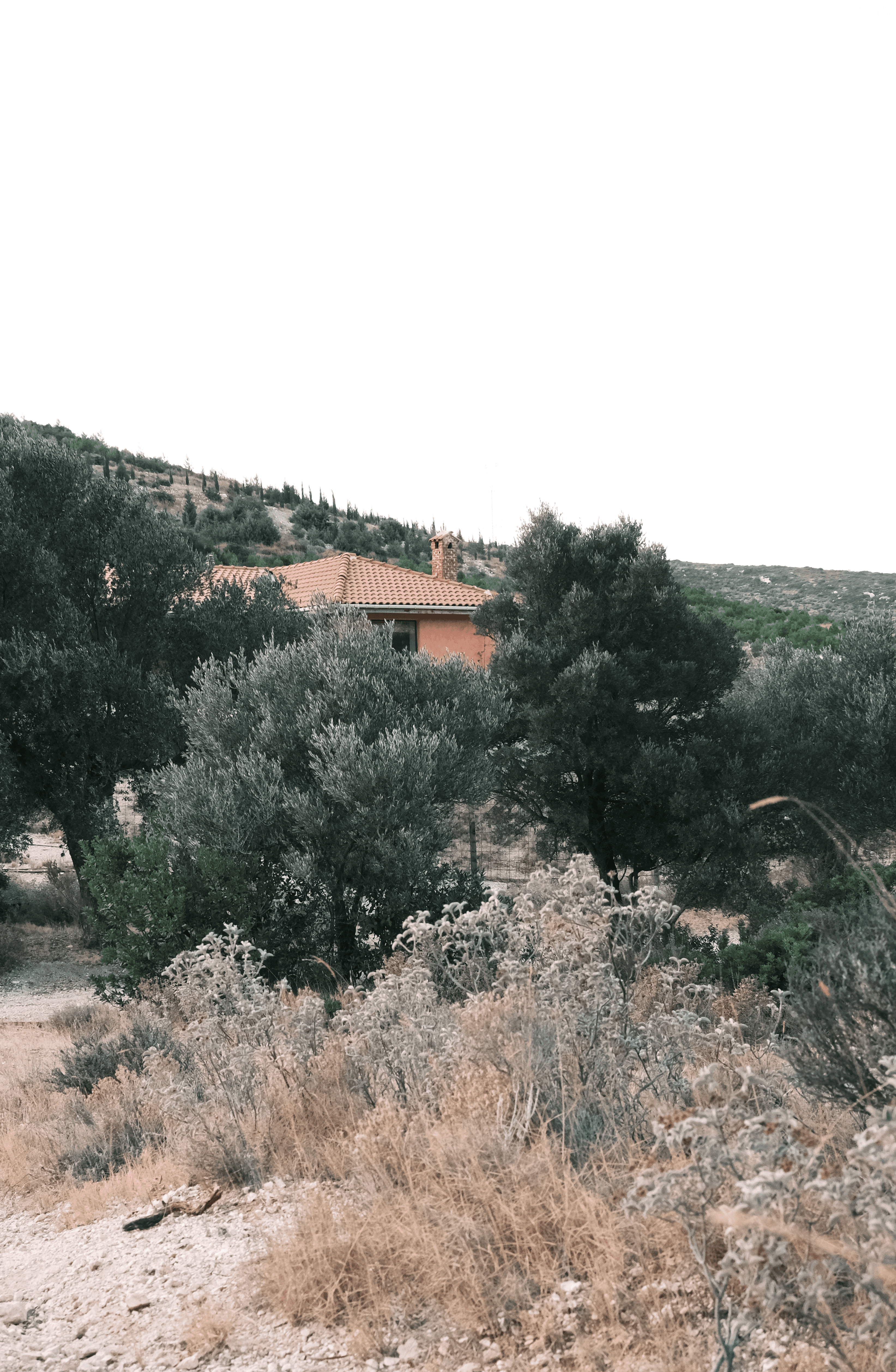
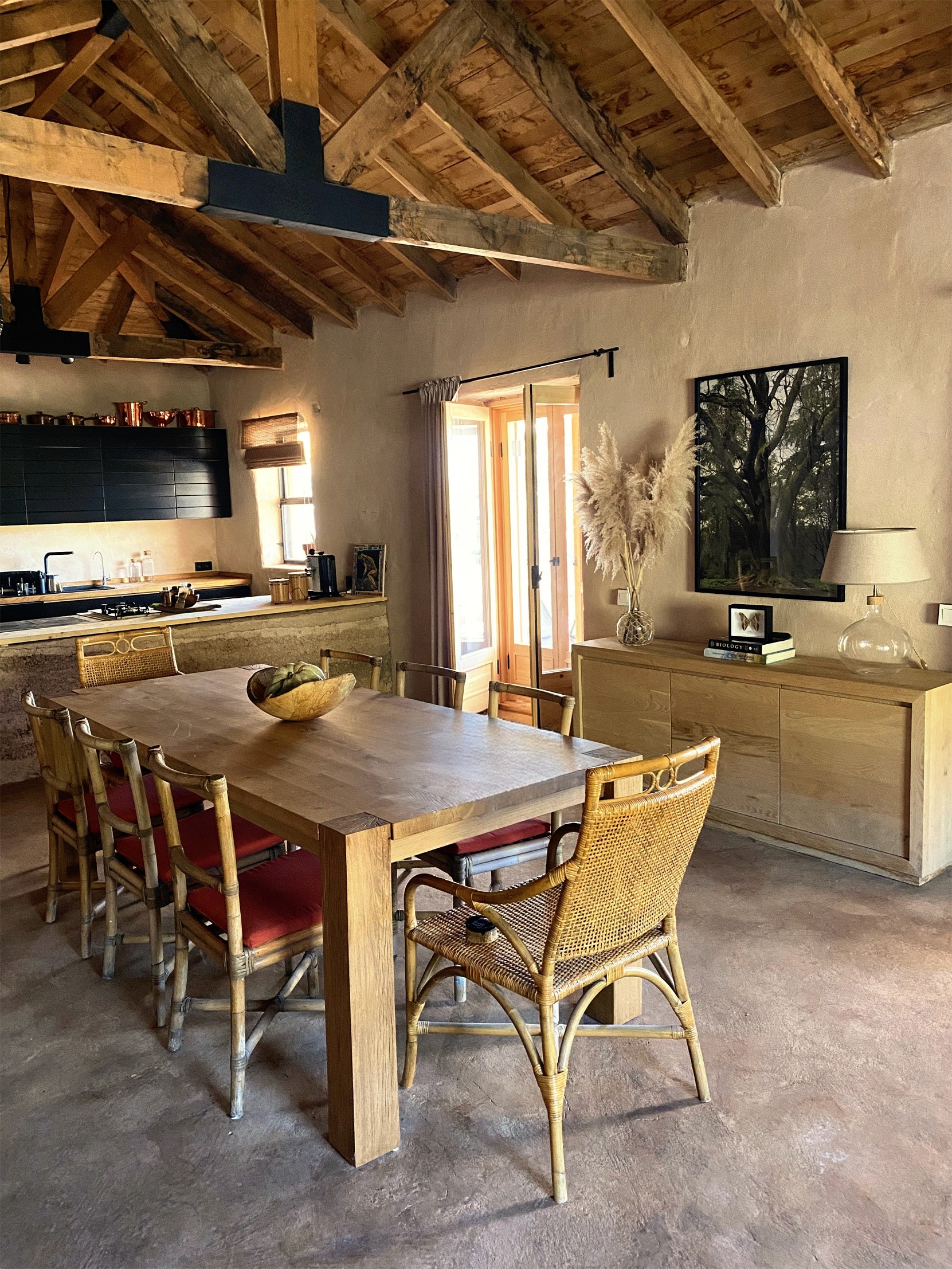
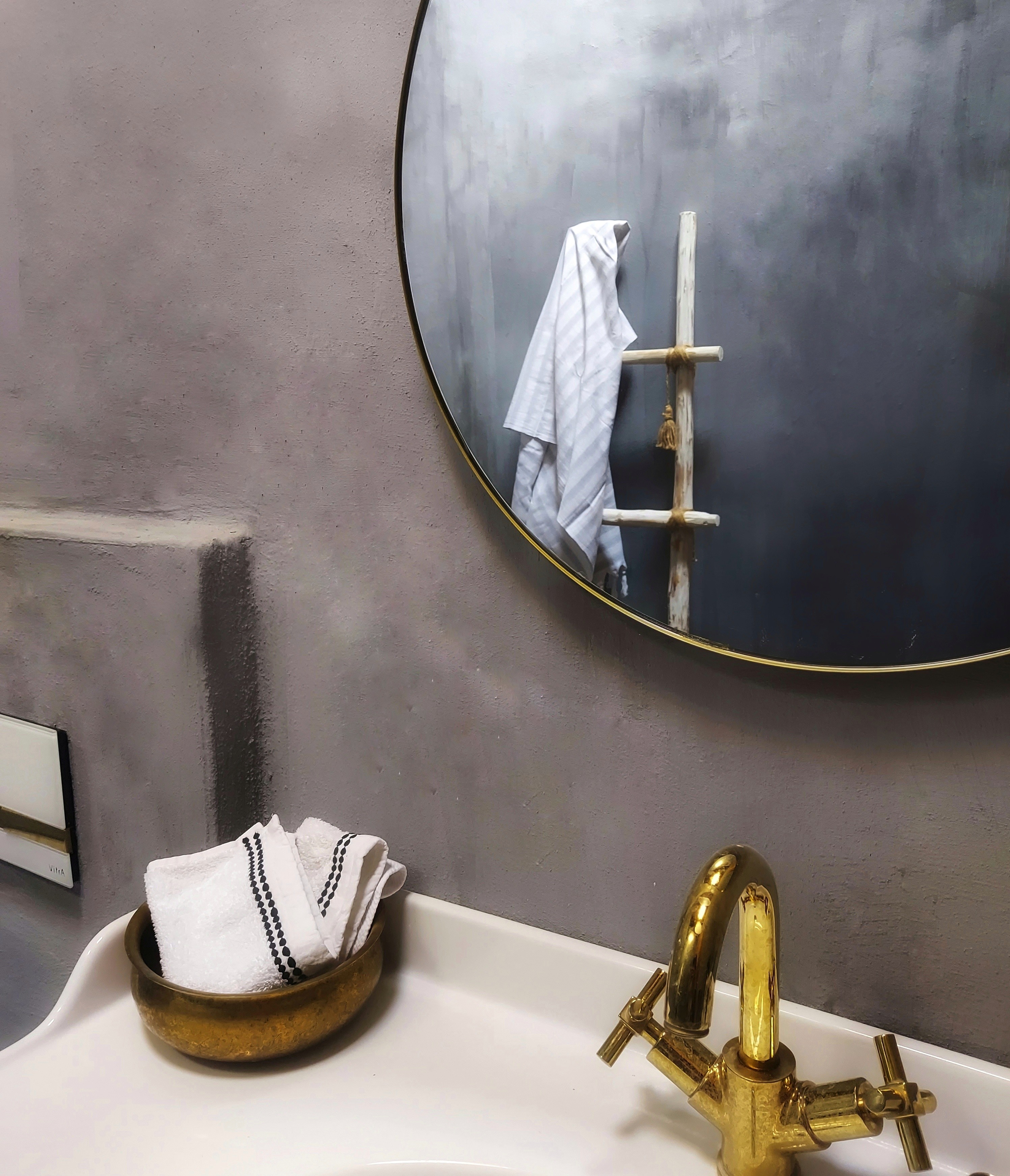
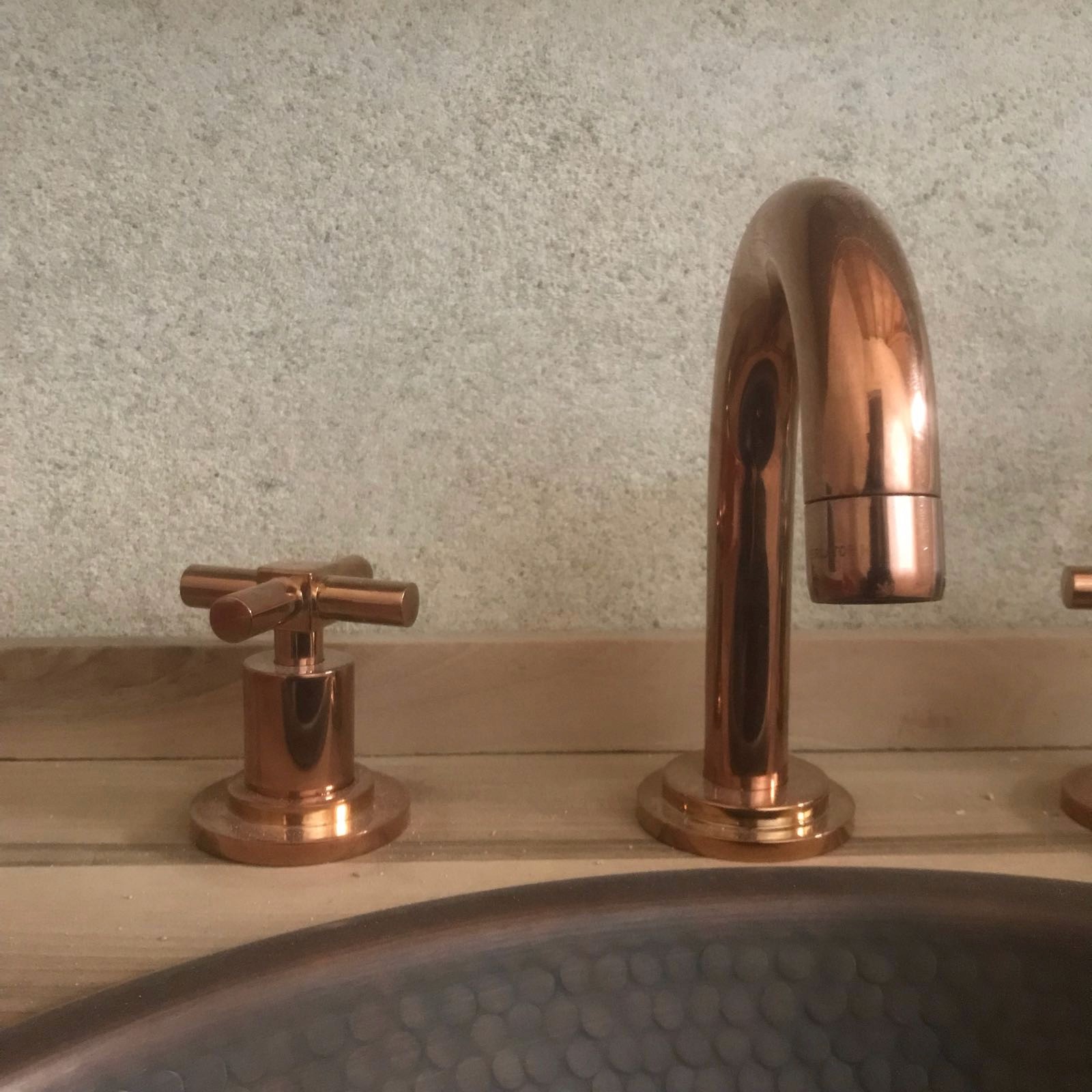
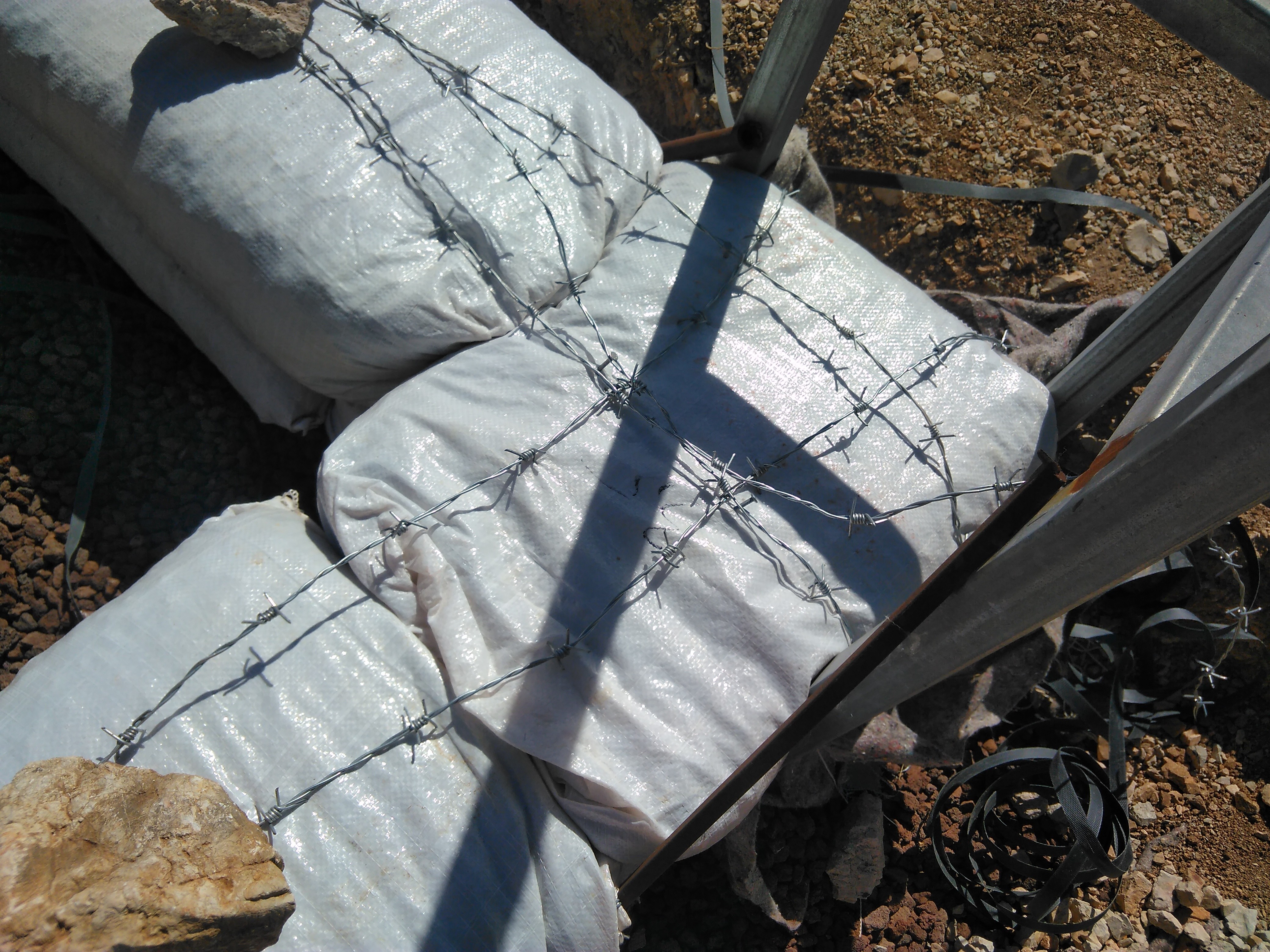
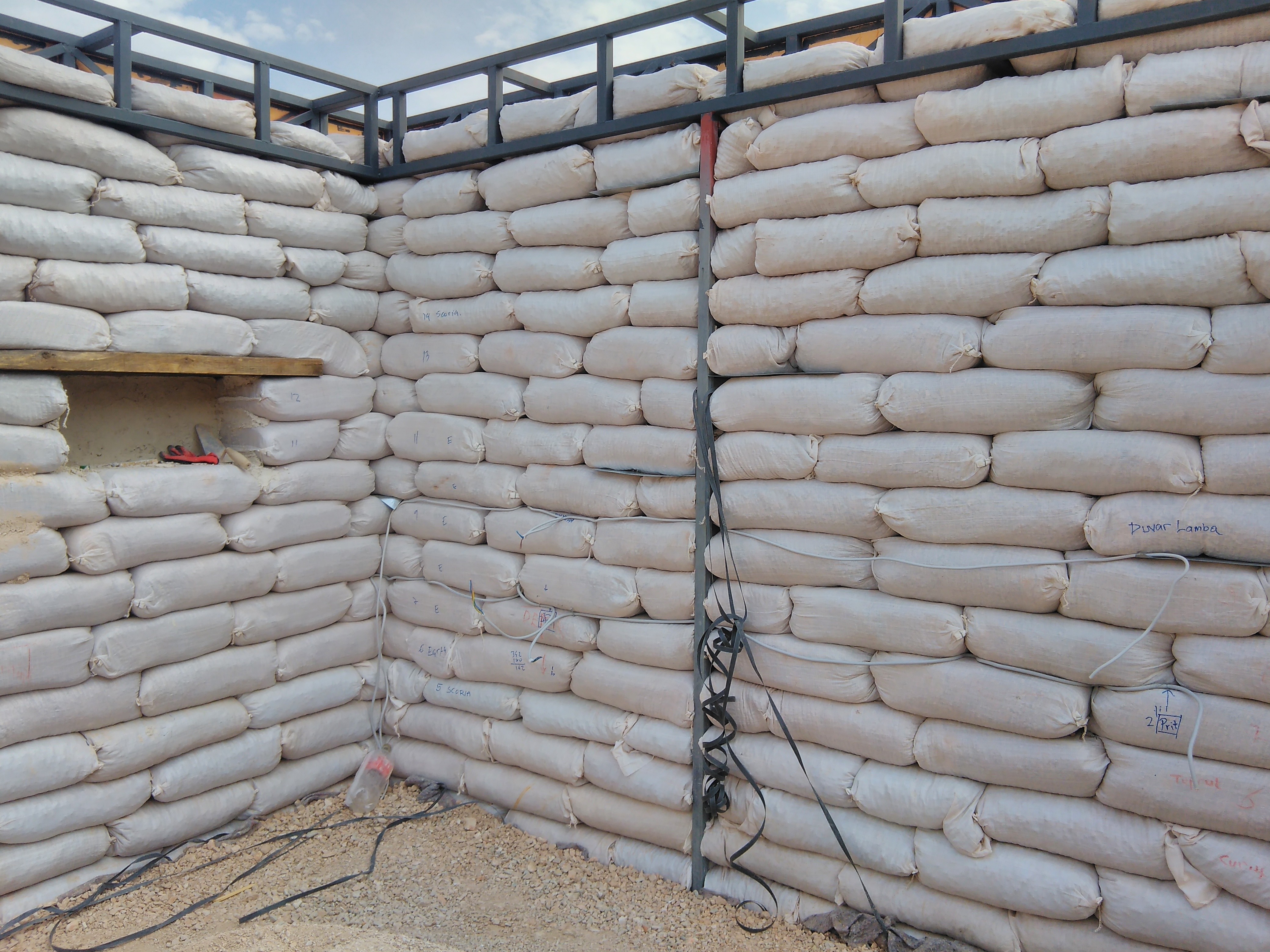
The design aimed to create living spaces that coexist with the terrain through ecological and resource-conscious construction methods. The houses were sited on rocky areas with sparse vegetation, minimizing impact on existing habitats. Built along the natural slope, the terrain required grading, and the excavated earth was used in buildings. The foundations were laid as stone-and-gravel-filled trenches. The main house, 120 m², was built using the earthbag method, with soil-filled bags stacked to form thick walls that provide mass and stability. Earthen plasters and an earthen floor extend the continuity of the material, while lime finishes add durability and a natural brightness indoors. Inside, no synthetic materials, chemical finishes, or mass-produced furnishings were used; instead, raw materials such as earth, wood, and metal define the interior surfaces, furniture, and details, creating a healthy living environment integrated with the natural surroundings.
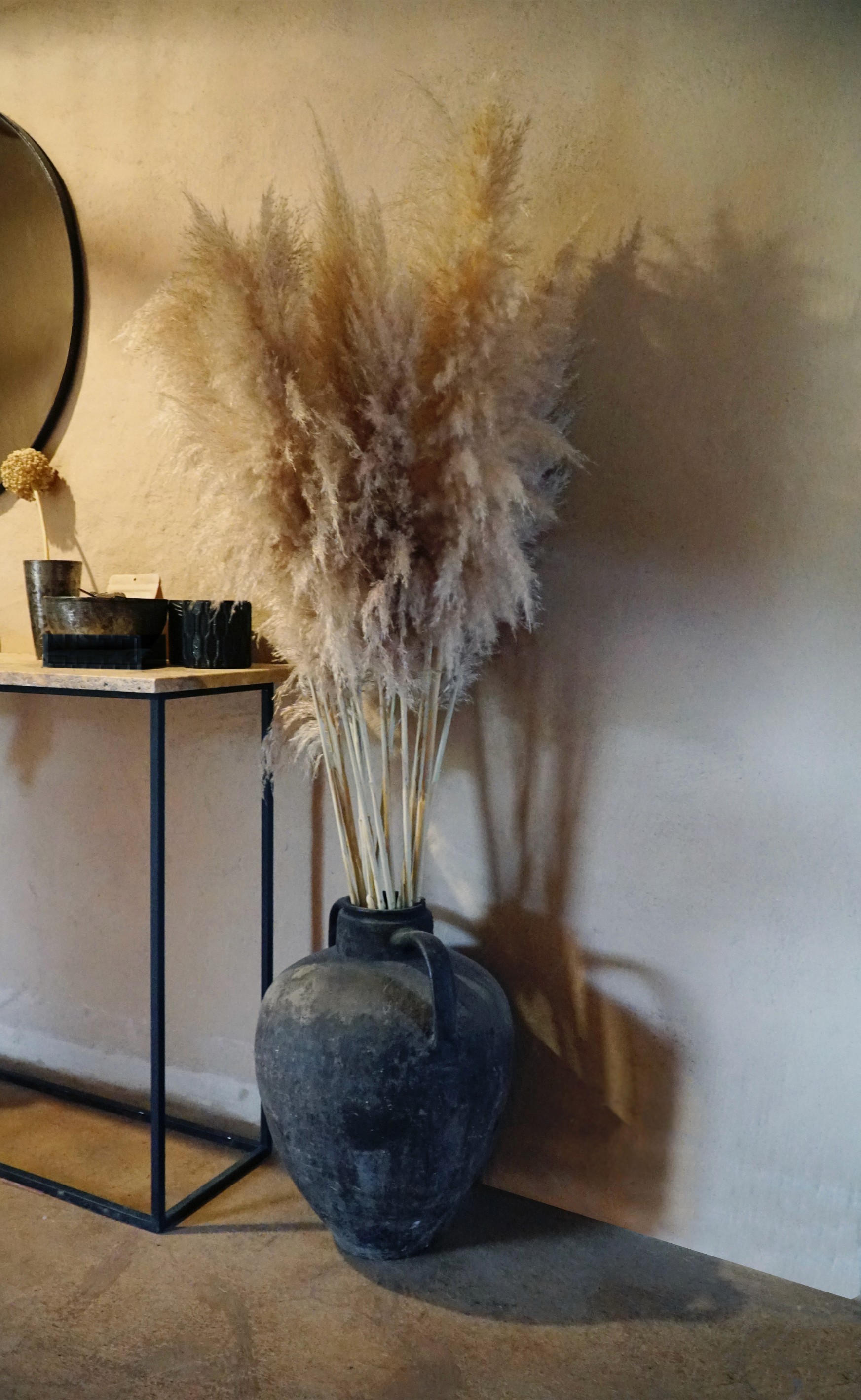
A smaller guesthouse and storage units were built with earthbags filled with scoria, a lightweight volcanic rock sourced locally. While soil provides thermal mass, scoria offers insulation, keeping interiors cool in summer and warm in winter. This combination demonstrates the versatility of the earthbag method, adapting to different needs by combining thermal mass and insulation.
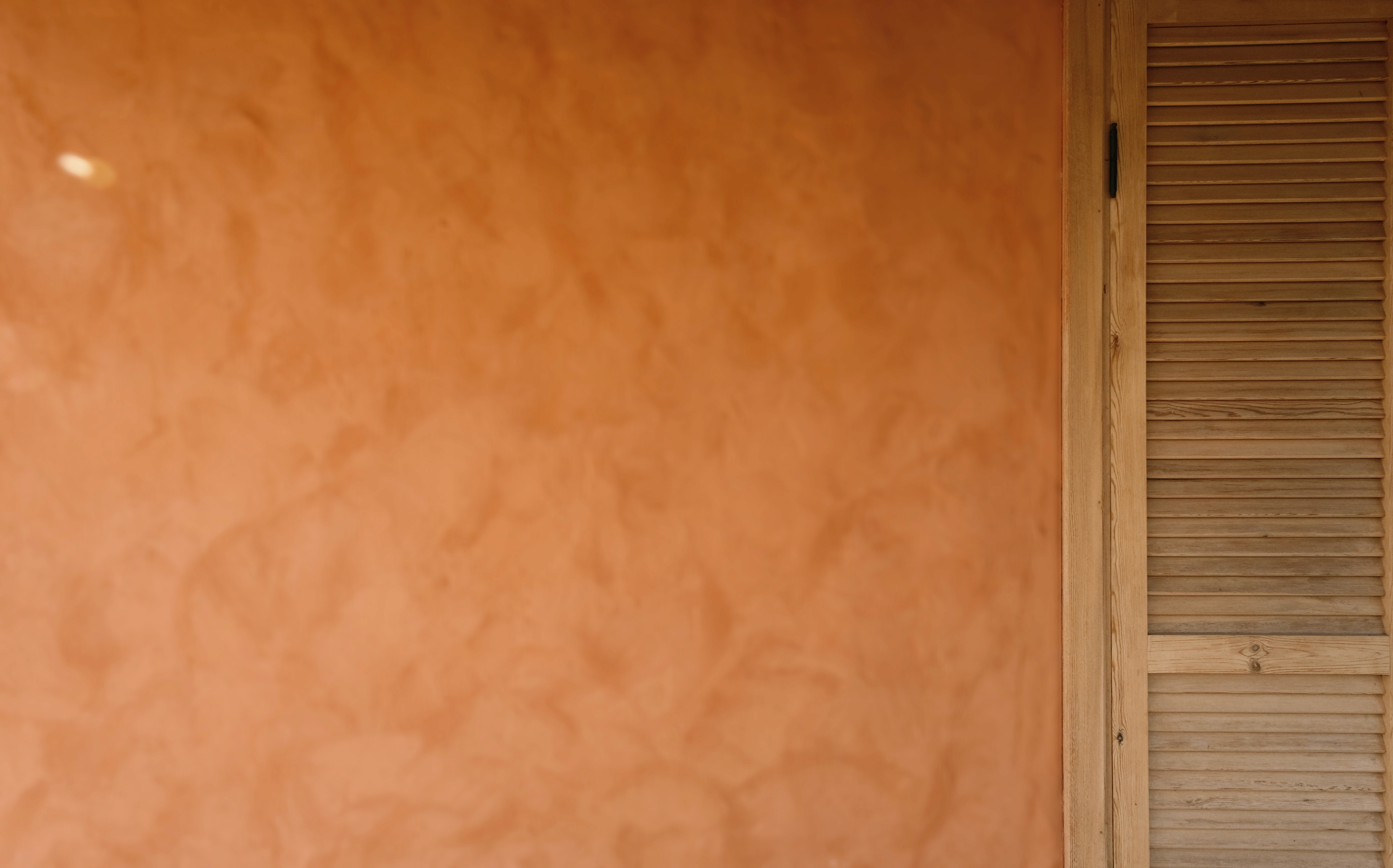
Earthbag construction offers both resilience and ecological performance. Thick walls, with their high thermal mass, stabilize indoor temperatures, while natural plasters regulate humidity and maintain a balanced indoor climate. The method reduces reliance on industrial materials, using instead locally sourced earth and stone with low energy demand. It provides durable and easily repairable structures; resistant to natural hazards, adaptable, and resource-efficient, making the technique well suited to the exposed terrain of the Karakovan Peninsula.
The site operates as a fully self-sufficient system. Energy is generated by solar panels, rainwater is harvested, and greywater and blackwater are treated through plants and reused on site. These infrastructures keep resource cycles within the land and eliminate the need for external systems.
Taken as a whole, Karakovan reflects an approach to building that prioritizes harmony with place over imposition upon it. Through low-impact and geography-sensitive building practices, the project demonstrates how architecture can adapt to terrain, climate, and local resources, creating living spaces that are resilient, self-sufficient, and deeply connected to their environment. As both a permanent residence and a long-term laboratory, it embodies an ongoing exploration of ecological living.
kk
note